
10 Best Digital Health Companies Leading the Future of Care




Author
As CEO and Founder of Kangaroohealth, Dr. Kang is a healthcare innovator with nearly two decades of experience in healthcare and 20+ national and international awards. She received her PhD and medical training from Johns Hopkins University.Dr. Kang, CEO and Founder of Kangaroohealth, is a healthcare innovator with nearly two decades of experience. She has received over 20 national and international awards. Dr. Kang completed her PhD and medical training at Johns Hopkins University.


Traditionally, patients had to visit a provider’s practice in person to get healthcare services. That reality is rapidly changing as various innovative digital health solutions become popular.
For instance, in chronic care, remote patient care platforms are extending providers’ reach beyond clinic walls, ensuring patients receive continuous, high-touch care to better manage their conditions and reduce avoidable adverse events.
In this post, we’ll discuss the various digital health companies currently transforming healthcare nationwide and offer guidance on selecting the best one for your practice.
TL;DR - 10 Best Digital Health Companies
Here’s a breakdown of the top digital health companies currently shaping healthcare delivery:
| Column 1 | Column 2 | Column 3 |
|---|---|---|
Company | Features | Best For |
KangarooHealth | Remote patient monitoring and care coordination features | Remote patient care for chronic conditions (RPM, RTM, CCM, PCM, APCM, and GUIDE) |
Integrates with more than 100 wearable devices | ||
Seamless EHR integration | ||
AI-powered predictive analytics | ||
Omnichannel communication (to engage with patients) | ||
Automated documentation | ||
CureMD | EHR features | Streamlining administration and operations |
Practice management features | ||
Medical billing features | ||
eClinicalWorks | EHR features | Outpatient practices looking to streamline admin tasks |
Clinical documentation | ||
Patient engagement features | ||
Patient data research | ||
RCM features | ||
athenahealth | AI-native EHR | Providers looking for AI-native workflows to reduce administrative burden |
AI-supported note-taking | ||
RCM features | ||
Patient engagement features | ||
Abridge | Generative AI for note-taking | Health systems seeking an enterprise-grade AI solution for note-taking |
Ability to produce billable, audit-ready notes | ||
Hinge Health | Virtual physical therapy features | Providers, consultants, and individuals seeking structured virtual physical therapy |
Computer vision (motion tracking) | ||
Wearable device for pain relief | ||
NeuroFlow | Behavioral health risk analysis | Health systems and payers looking to scale behavioral health risk analysis |
Gamification features | ||
Teladoc | Virtual doctor support features | Health systems looking to facilitate 24/7 access to care via phone |
Chronic condition management features | ||
Oracle Health | Integrated enterprise solutions | Large health systems and government services seeking highly scalable digital health solutions |
Includes an EHR, clinical AI agent, data intelligence, and population health management | ||
Sprinter Health | Hybrid care leveraging “sprinters” on the ground | Primary providers looking to effectively address social determinants of health |
Predictive logistics |
What is a Digital Health Company?
Digital health companies utilize devices, software, and data analytics to improve the efficiency and personalization of healthcare delivery.
The key digital technologies enabling this shift include:
- Mobile and web applications
- Artificial intelligence and data analytics
- Internet of things and connected medical devices
- APIs and interoperability, as many providers require seamless integration with their existing EMRs/EHRs
Many providers across the board are already leveraging the infrastructure provided by these companies, ranging from remote patient monitoring solutions to AI-driven insights, to support patient-centered care outside traditional clinical settings.
Benefits of Digital Health Companies for Patients and Providers
Digital health companies create win-win scenarios for both patients and providers by improving efficiency and personalization in healthcare delivery.
Here are some of the benefits for providers:
- Empowering care continuity: Providers no longer have to wait until the next in-person appointment to know if interventions are working. They can use digital tools to track both physiological data and subjective data, such as patient satisfaction.
- Access to underserved communities: Digital health companies are helping solve the economic and geographic divide in access to care. Rural and low-income communities, which generally have lower provider-to-patient ratios, are leveraging digital health infrastructure to bridge existing healthcare access gaps.
- Ensures efficient allocation of clinical resources: Digital health companies are streamlining and automating various time-intensive tasks, including documentation and billing management. Providers can then reallocate the saved personnel hours to actual patient care, resulting in improved overall outcomes.
Additionally, a growing body of evidence supports the impact of digital health on patient outcomes. For instance, a systematic review and meta-analysis of studies published between 2020 and 2025 quantified the transformative effect of digital health across key performance indicators:
- Patient satisfaction: From a 68% baseline in traditional care to 70-75% in telehealth and virtual nursing.
- Readmission rates: The absolute rate of acute care use dropped from 27.3% to 22%.
- Wait times: Traditionally, patients may need to wait weeks to see a provider. For telehealth, wait times are significantly shorter, and appointments are mostly on demand.
Types of Digital Health Companies
You can categorize digital health companies based on the primary problems they aim to solve.
Here are the common types:
- Remote patient care companies: These companies focus on extending the reach of healthcare providers beyond the clinic to remotely monitor patient data, coordinate care, and enhance patient engagement. They are suitable for rolling out programs like Remote Patient Monitoring (RPM) and Chronic Care Management (CCM).
- Revenue cycle management (RCM) companies: Providers often need help managing each patient’s financial lifecycle, from appointment scheduling to the final payment. RCM companies provide the infrastructure to manage this journey as well as the coordination between the doctor, the patient, and the payer.
- Telehealth and hybrid care companies: These are virtual-first clinics where the healthcare journey begins digitally. They are valuable because many healthcare needs don’t require a physical examination at the clinic.
- Digital therapeutics (DTx) companies: They utilize software for direct medical intervention, i.e., to treat, manage, or prevent a specific disease. For instance, an app designed specifically to help manage ADHD.
- Health technology and operations companies: These companies streamline the operations and administrative side of running a healthcare business. Depending on the features offered, you can use them for workflow automation, note capture, transcription, documentation, billing support, and checking payer status, among other purposes.

Top 10 Digital Health Companies
Several digital health companies are enabling and streamlining remote patient care, revenue cycle management, hybrid care, digital therapeutics, and healthcare administration.
Here are the top 10 players you should know:
1. KangarooHealth

KangarooHealth is a remote patient care platform helping providers deliver high-touch care to chronic patients wherever they are.
Our platform supports Remote Patient Monitoring (RPM), Chronic Care Management (CCM), Principal Care Management (PCM), Remote Therapeutic Management (RTM), Advanced Primary Care Management (APCM), and Guiding an Improved Dementia Experience (GUIDE).
We stand out for the following reasons:
- Our all-in-one connected care platform supports over 50 chronic conditions with customizable care pathways and seamless workflow integration.
- Our platform is device agnostic, allowing you to choose your preferred remote monitoring devices.
- We have multilingual nurses for clinical monitoring and patient engagement, enabling you to roll out high-touch remote patient care without hiring new staff.
- We provide a turnkey implementation that will see you up and running in weeks, not months.
Ready to see how remote patient monitoring and care coordination can impact your practice?
Contact us today at KangarooHealth to speak with an expert.
2. CureMD
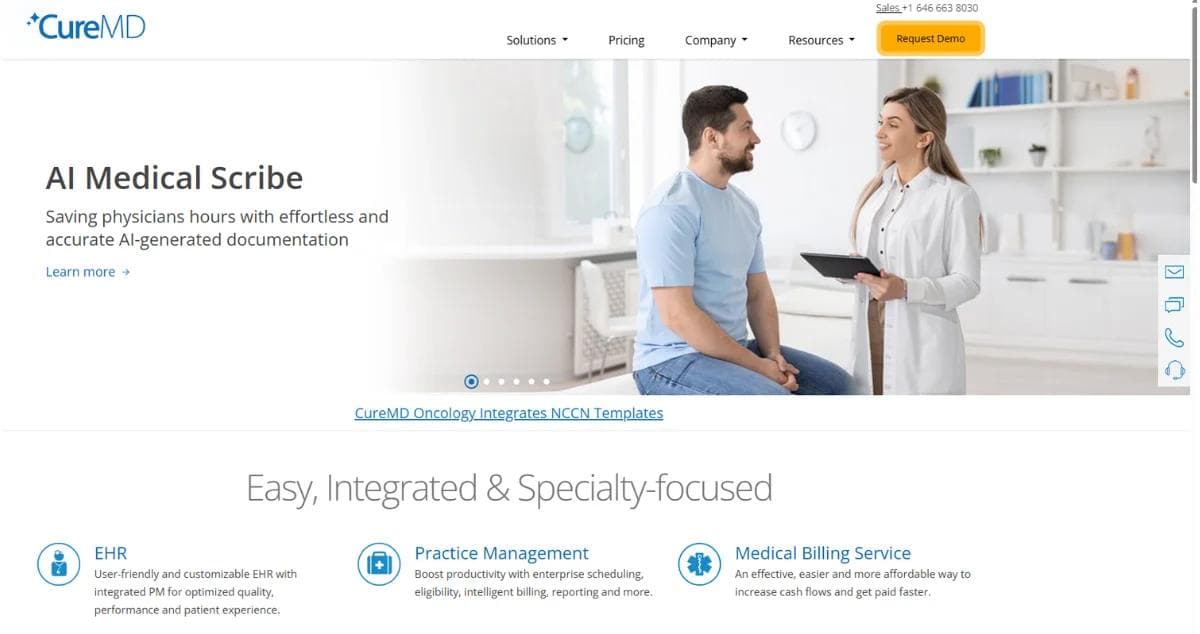
CureMD offers a suite of tools for practice and productivity management, including an AI-powered scribe for automated documentation.
You can use its unified solutions to manage health records, optimize revenue cycles, standardize compliance workflows, and support chronic care management.
However, its remote patient care offering is limited, as it does not offer clinical support services.
3. eClinicalWorks
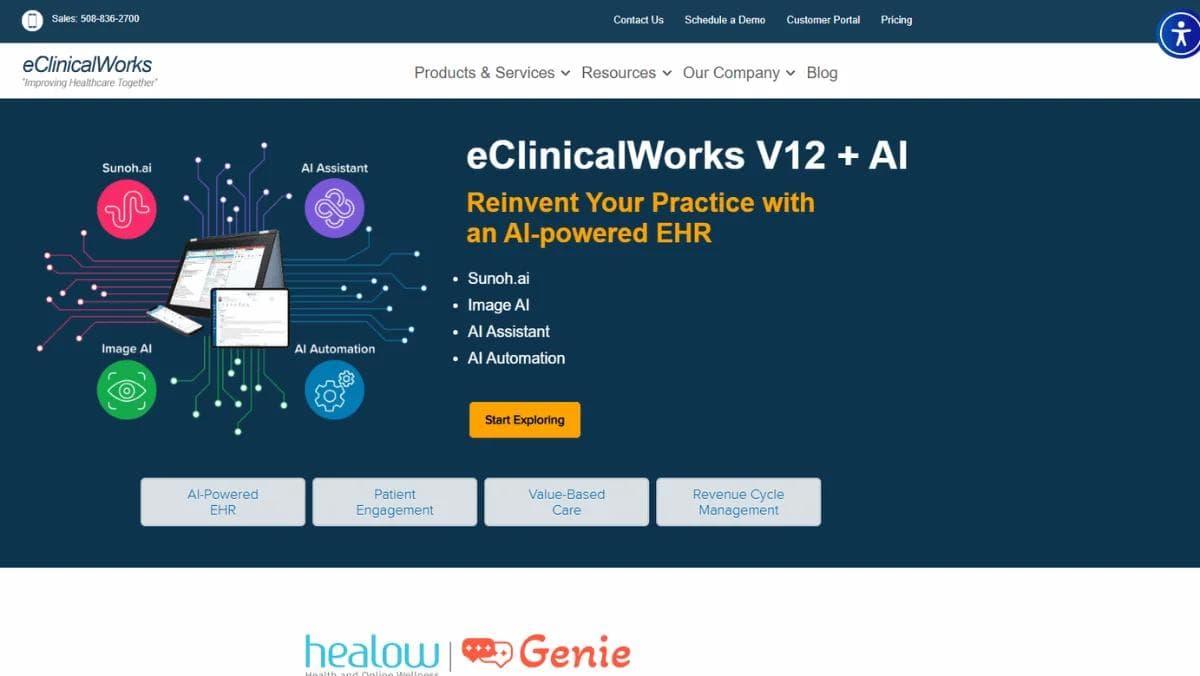
The company primarily offers EHR services tailored to healthcare specialties, including dental, vision, behavioral health, ambulatory care, and urgent care.
It also has telehealth solutions, supporting population health management, patient engagement, and revenue cycle management.
It may not be a good fit if you need consistent support, as customer feedback indicates its support system can be slow at times.
4. athenahealth
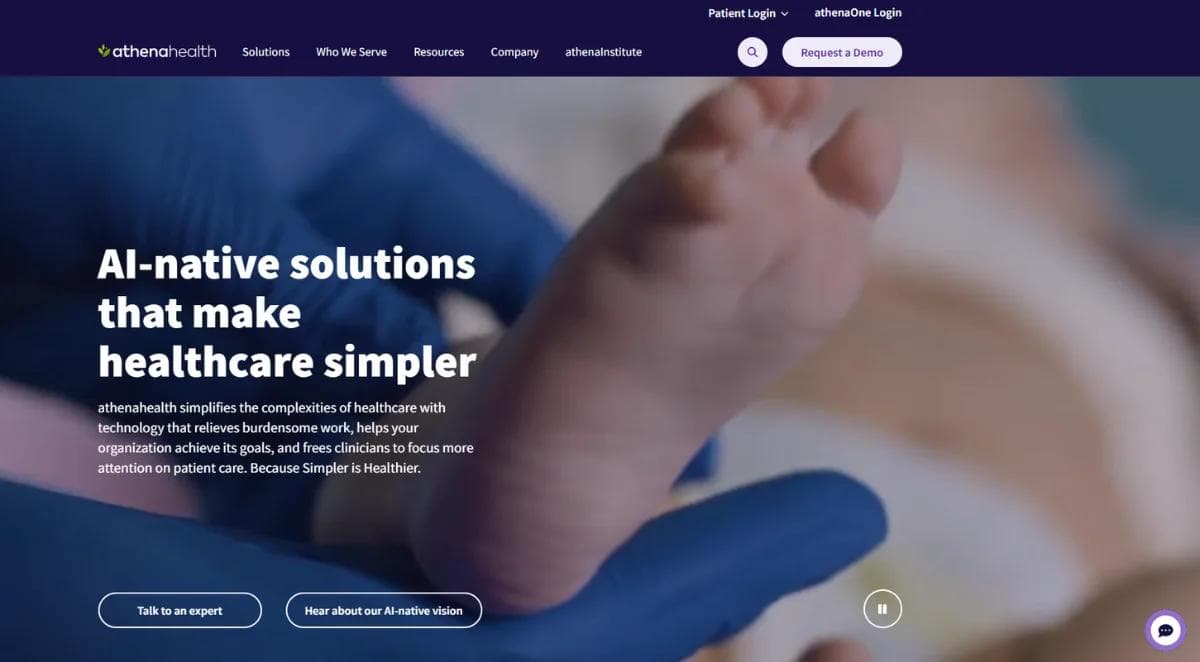
The company offers a suite of digital health tools, including an Electronic Health Record, medical billing and practice management solutions, and patient engagement software.
The company has AI-native capabilities built to serve various provider organizations and medical specialties, from Behavioral Health and Women’s Health.
5. Abridge

The company offers a specialized generative AI platform for transforming provider-patient conversations into clinically useful notes.
It is one of the leading companies in the space, producing billable and audit-ready documentation. Major health systems, including Mayo Clinic and Johns Hopkins, use the platform.
6. Hinge Health

It is a popular digital musculoskeletal clinic that helps individuals, consultants, and employers drive engagement and improve outcomes.
The company offers guided exercise sessions, a dedicated care team, and personalized programs tailored to each individual's needs.
The exercises are designed by physical therapists and adapt to a patient’s changing pain levels.
7. NeuroFlow
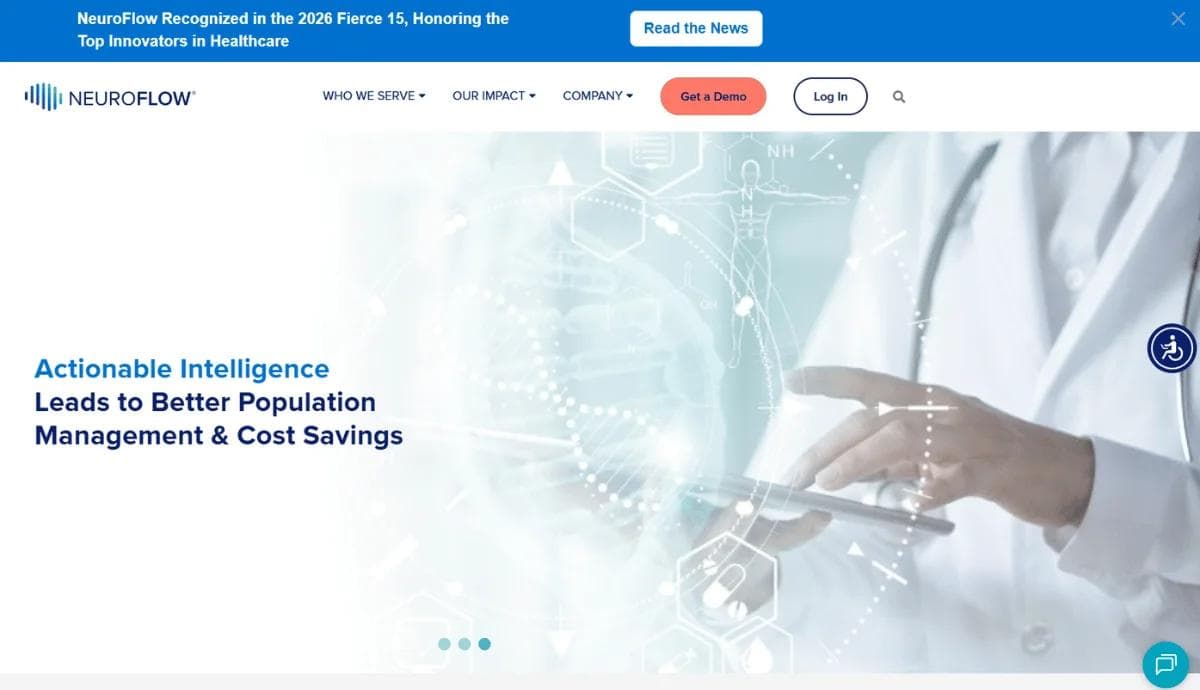
It is a leading platform for behavioral health integration, helping providers identify and address hidden behavioral health risks within their patient populations.
It provides the robust infrastructure that health systems, payers, and the federal government need to manage behavioral health risk at scale. The result is better cost control and improved outcomes.
8. Teladoc

The company primarily operates as a doctor-on-call service, connecting patients and providers for medical care, chronic condition management, and mental health services.
It’s a 24/7 service that enables patients to speak with a doctor at any time.
The condition management offering covers diabetes, weight, and blood pressure management.
9. Oracle Health

Formerly known as Cerner, Oracle Health offers a wide range of digital health services, including an EHR, an ambient AI documentation product, population health management solutions, and Enterprise Resource Planning solutions.
It’s best suited for large health systems and government services seeking highly scalable enterprise solutions.
It may not be a good fit if you need an easy-to-deploy solution, as the Oracle ecosystem is costly and complex to implement.
10. Sprinter Health
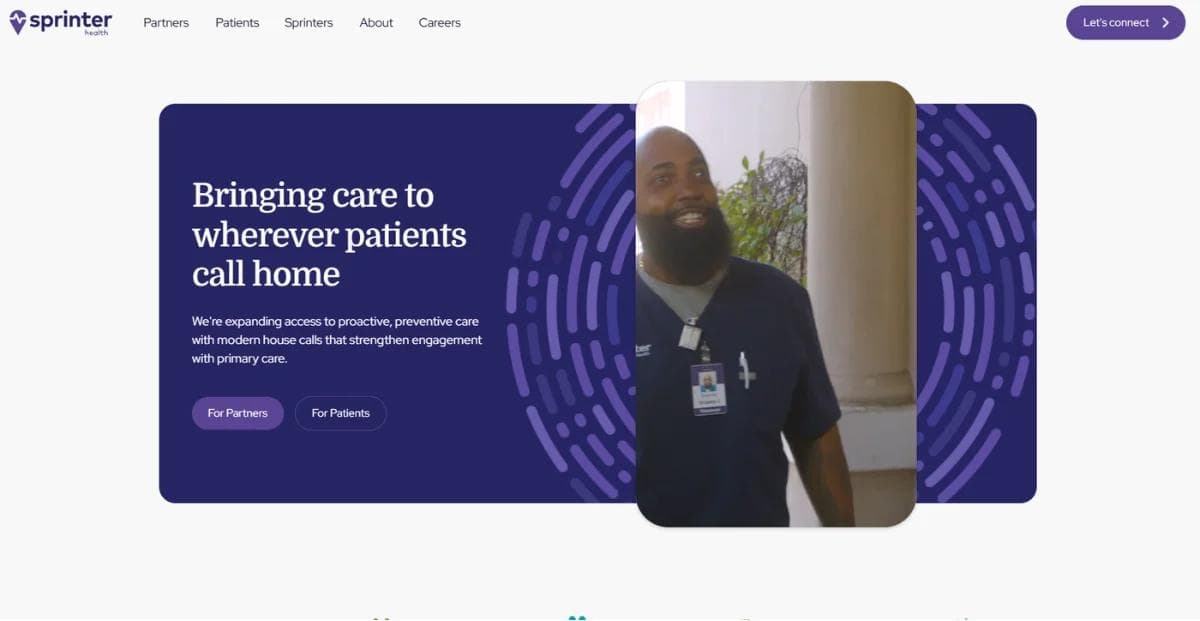
Virtual-first healthcare providers need boots on the ground. Sprinter Health runs a hybrid digital and in-person care that makes it possible for the company and its partners to deliver personalized primary care.
The service makes use of “sprinters” drawn from the communities they serve. They include nurse practitioners and physician assistants, pharmacists, and care navigators.
Key Features to Look for in Digital Health Companies
If you are looking to leverage digital infrastructure to improve healthcare delivery, here are the key features to look out for in digital health solutions:
- For remote patient care: A device-agnostic platform, integration with popular wearables, seamless EHR integration, omnichannel communication, AI-risk stratification, automated CPT code tracking, and audit-ready documentation.
- For revenue cycle management: Real Time Eligibility (RTE), automated prior authorization, automated coding, charge capture audits, and predictive denial prevention.
- For building a hybrid healthcare model: Intelligent self-triage, digital intake, pre-visit collection, integrated ambient AI scribing, and boots on the ground.
- For admin and operational management: Unified patient charts, Clinical Decision Support (CDS) features, smart scheduling, digital front door, and interoperability.
How Digital Health Companies Are Shaping the Future of Healthcare
Digital health companies will play an increasingly bigger role in healthcare delivery going forward. Their adoption is likely to accelerate, as key industry players are already on board.
For instance, Medicare is aggressively pushing to expand access to technology-supported care. It will test the ACCESS (Advancing Chronic Care with Effective, Scalable Solutions) Model, beginning July 5, 2026, for a period of 10 years.
At KangarooHealth, here are the key shifts we are seeing:
- Accelerated rural healthcare transformation: For a long time, there has been a geographic divide in healthcare delivery. Approximately 20% of the nation’s population resides in rural areas, while only about 10% of physicians practice there. Remote monitoring and the reduction of administrative burden through AI-powered solutions are helping rural-based providers increase access to care.
- Increased adoption of virtual clinical support: According to the American Hospital Association, 74% of hospital leaders now believe that virtual nursing will be integral to the future of acute care. At KangarooHealth, we are already ahead, offering virtual clinical support services with a team of multi-lingual nurses to providers using our remote patient care solutions.

Frequently Asked Questions (FAQs)
Let’s answer some of the common questions we get about digital health solutions:
What is the Difference Between Healthtech and Digital Health?
Healthtech is the umbrella term for technology used to improve healthcare delivery and outcomes. It encompasses both the hardware and software components.
Digital health is a more specific term, referring to software platforms and data analytics tools used in healthcare.
How Secure is Patient Data in Digital Health Platforms?
Medical-grade digital health platforms are generally HIPAA-compliant.
They utilize a range of access control and data protection features to secure patient data.
Are Digital Health Platforms Suitable for Elderly Patients?
Yes, senior patients benefit significantly from digital health, as it reduces the need for frequent in-office visits, which can be both physically and financially costly.
Are Digital Health Companies Covered by Insurance?
Yes, value-based care models championed by Medicare are influencing the shift in coverage.
Many public and private payers now cover a range of digital health services.
Conclusion
The future of healthcare delivery is patient-centered and hybrid. The transition is right on course, with many digital health companies now offering the infrastructure to expand access to care, reduce administrative burdens, and improve chronic disease management.
At KangarooHealth, we are already helping providers across the nation monitor chronic patients between visits, intervene earlier, and deliver high-touch care at scale.
However, the value of digital health doesn’t rely only on the technology. Great implementation is equally essential. It’s for this reason that we offer turnkey implementation that includes patient onboarding and education, device procurement and distribution, and a multi-lingual virtual nursing team for clinical monitoring.
Connect with us today to explore what’s possible with digital health and get all your questions answered by an expert.

Dr. Xiaoxu Kang
AuthorAs CEO and Founder of Kangaroohealth, Dr. Kang is a healthcare innovator with nearly two decades of experience in healthcare and 20+ national and international awards. She received her PhD and medical training from Johns Hopkins University.Dr. Kang, CEO and Founder of Kangaroohealth, is a healthcare innovator with nearly two decades of experience. She has received over 20 national and international awards. Dr. Kang completed her PhD and medical training at Johns Hopkins University.